
Building personalization strategies can feel complex at first. Let’s clear things up.
Your website visitors aren’t just traffic. They’re people—with preferences, habits, and expectations. And right now, they’re deciding whether your experience feels relevant enough to stick around.
That’s where personalization comes in.
At its core, personalization means tailoring every step of the customer journey—what people see, when they see it, and why it matters to them. Think targeted landing pages, product recommendations that actually resonate, messages that feel like they were written for one person, not a million.
And it’s no longer a nice-to-have, because 71% of consumers expect personalized interactions, and 76% say they get frustrated when they don’t get them.
Today’s shoppers don’t just want to be seen. They want to feel understood. When a brand gets that right, it builds trust, drives conversions, and keeps people coming back.
So how do you get there? It starts with knowing your customers—and using that knowledge wisely.
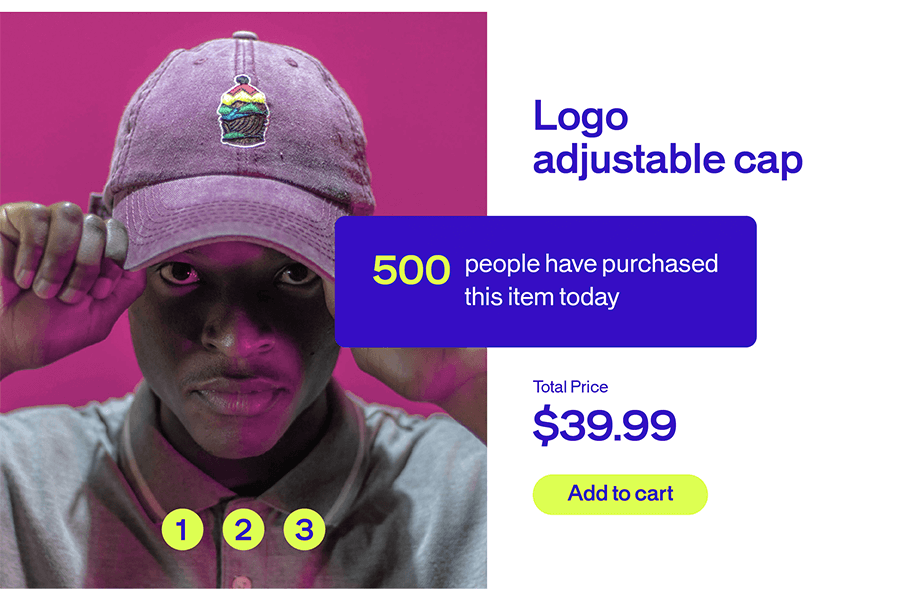
Why Is It Important for E-commerce Brands to Personalize User Experiences?
Many brands think they’ve got personalization covered. A first-name in an email here, a “you might also like” section there. But there’s a real difference between adding a few personal touches and truly knowing what your customers want and expect from you.
The brands that get it right never stop evolving. The more they learn about their customers, the better the experience gets. And the better the experience, the more loyal the customer becomes.
Here’s the thing: personalization isn’t a feature. It’s a mindset.
- Your customers already expect it. Your customers aren’t comparing you to your direct competitors anymore. They’re comparing you to every great digital experience they’ve ever had. Meet the expectation or risk losing them to someone who will.
- It turns browsers into buyers. When you show the right product, to the right person, at the right moment conversion follows naturally. The more relevant the experience, the more likely the click, the add-to-cart, and the purchase. In fact, faster-growing companies derive 40% more revenue from personalization than their slower-growing peers.
- It builds the kind of loyalty that lasts. When a customer feels understood, and your site greets them warmly, remembers their preferences, and surprises them with a birthday voucher—they don’t just buy again. They stay. And the loop keeps going: more interactions mean more data, more data means better experiences, better experiences mean deeper loyalty.
What does that look like in practice?
- Product recommendations curated from browsing and purchase history
- Welcome messages that adapt for new vs. returning visitors
- Modal pop-ups and how-to guides for first-time visitors who need a nudge
- Personalized emails and vouchers triggered by birthdays or milestones
- Tailored landing pages that reflect where a customer is in their journey
Small touches. Big impact.
A/B Testing vs. Personalization: What’s the Difference and Why Does It Matter?
| A/B Testing | Personalization | |
| Core Purpose | Evaluates multiple variations of an experience to discover the overall winning option | Customizes the user journey according to unique visitor tastes and behaviors |
| Target Audience | Focuses on general trends that appeal to the largest segment of your audience | Provides extremely targeted and relevant interactions for specific individuals rather than the broad majority |
| Execution Timeline | Tests are conducted one after another (sequentially) | Tests are run simultaneously (in parallel) |
| Technical Requirements | Depends heavily on developer and engineering support | Requires very little technical or engineering involvement |
Let’s start with what A/B testing does well—because it does a lot.
You pick an element, create two versions, split your traffic, and let the data decide. It’s structured, scientific, and genuinely useful for understanding what moves the needle. Want to know if a red CTA button outperforms a green one? Run a test. Want to validate a new homepage layout? Run a test. A/B testing is one of the most reliable tools in any optimization toolkit.
But here’s where it hits a wall.
A/B testing optimizes for the average.
It finds the version that works best for the majority, then rolls it out to everyone. Sounds logical, right?
Until you remember that “everyone” is never actually one person.
Your audience is a mix — first-time visitors and loyal regulars, bargain hunters and premium buyers, mobile browsers and desktop shoppers. A single winning variation can’t speak to all of them equally.
Take a retailer testing their homepage banner. Their audience skews 70% female. The women’s-focused banner wins — so it gets deployed to 100% of visitors, including the 30% of men for whom it’s completely irrelevant.
The test worked. The experience didn’t.
There’s also a velocity problem. You can only run one A/B test at a time on a given element without risking interference. And the more tests you run, the smaller the gains become. At some point, you’ve squeezed everything you can out of the average — and the ceiling is right there.
That’s exactly where personalization picks up.
A/B testing asks: “What works best for most people?”
Personalization asks: “What works best for this person, right now?”
It’s not about replacing testing. It’s about going further with what testing teaches you.
Here’s the key distinction:
- A/B testing is about structure. It changes what your site looks like.
- Personalization is about relevance. It changes who sees what — and when.
With personalization, there’s no single winner for everyone. Instead, you’re running multiple targeted experiences in parallel — each one tailored to a specific segment, each one shaped by real behavioral data.
A returning customer who always shops the sale section sees something different from a first-time visitor who just landed from a paid ad. Both experiences are optimized. Neither is generic.
And unlike A/B tests, personalization campaigns don’t interfere with each other — because they’re additive, not competitive. You’re not splitting your audience to find a winner. You’re giving each part of your audience exactly
When you bring them together, the real magic happens.
Think of it as a two-step process:
- A/B testing tells you what works.
- Personalization makes sure it works for everyone — not just the majority.
You test to find the best message, the best layout, the best creative. Then you personalize to deliver the right version, to the right person, at exactly the right moment.
Add AI into the mix, and the loop becomes self-reinforcing. Machine learning analyzes how every variation performs across every segment in real time — automatically serving the most relevant experience to each visitor, continuously improving without any manual intervention.
The result? Less guesswork. More relevance. And experiences that feel less like a website — and more like a conversation.
How Does A/B Testing Validate Your Personalization Strategy?
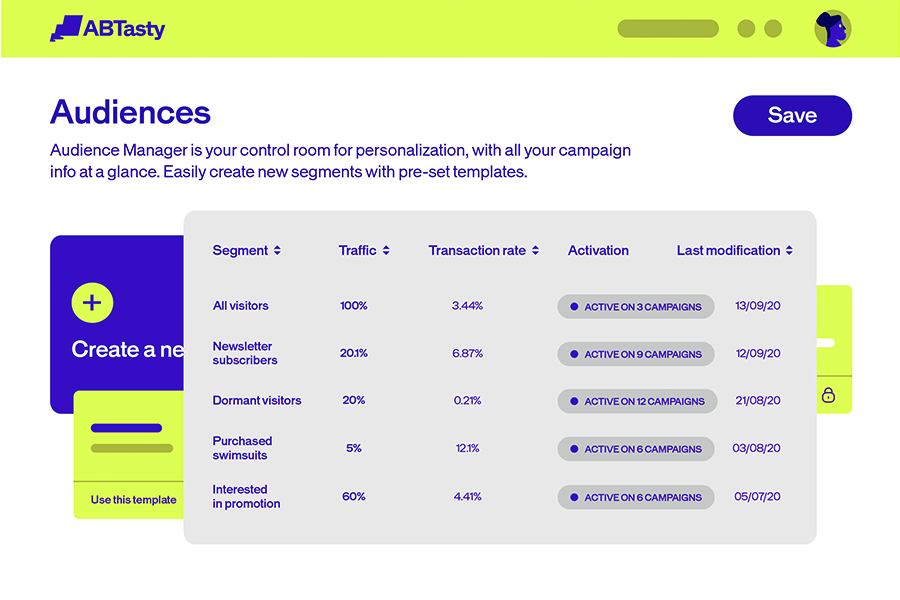
Once you’ve committed to running a personalization campaign and set your goals, you must know how to measure if it’s working or not. Here are a few guidelines to consider:
Test, test, and test again
You may already use web experimentation tools to optimize your website or your landing pages, but you can go even further and run A/B tests to identify which personalized version of your website works best for a given segment.
Every test will reveal the most effective element to deploy so you can keep improving your site accordingly.
Ensure data reliability for your A/B testing solution
Conduct at least one A/A test to ensure traffic really is randomly assigned to different versions. If there is a dramatic skew between versions, something has gone wrong and will throw off your results.
Test one variable at a time
This is the golden rule of A/B testing! To isolate the impact of a certain variable, you’ll need to make sure this is the only one that changes between different tests.
Conduct one test at a time
When running several tests simultaneously, it can be hard to interpret the results and hone in on which elements have had the biggest impact. Focus on a single test before moving on to the next to ensure you’re measuring the impact of each modification correctly.
Adapt the number of variations to traffic volume
Bear in mind that the greater number of variations you test, the more traffic you’ll need. If you are unable to generate a large enough volume of traffic to test your assumptions, you should test the variation you believe will have the biggest impact first and slowly add variations over time.
Be aware of sample ratio mismatch while A/B testing →
Wait for statistical reliability before making definitive changes
Wait until the test attains statistical reliability of at least 95% before you hardcode any changes to your site. You don’t want to jump the gun and implement a modification that doesn’t really improve your existing website.
Measure multiple key performance indicators (KPIs)
Always set a primary objective and secondary objectives to measure your results. This can include your add-to-cart rate, the average cart value, click rates, etc.
Take note of marketing actions during a test
Keep in mind that large-scale marketing campaigns and other external variables can throw off your results. Make sure that you align with your marketing team and are fully aware of which campaigns are running in the background before interpreting the test results.
How Can Brands Scale Personalization?
Knowing personalization matters is one thing. Building it at scale is another.
The good news? You don’t have to figure it all out at once. Scaling personalization is a journey—and it starts with getting the right foundations in place.
McKinsey frames it around five key pillars: data, decisioning, design, distribution, and measurement. Together, they form the backbone of any personalization program that actually works at scale.
Here’s what that looks like in practice.
Start with your data.
You can’t personalize what you don’t understand. Scaling personalization starts with building a clear, centralized view of your customer — one that brings together browsing behavior, purchase history, real-time signals, and more.
The goal isn’t to collect everything. It’s to collect the right things, and make them accessible across every channel, in real time.
Make smarter decisions, faster.
Data alone doesn’t personalize anything. You need to act on it — quickly, and at scale.
That means using analytics and AI to:
- Spot behavioral patterns
- Group customers into meaningful segments
- Automatically serve the most relevant experience to each one
The brands winning at personalization aren’t making these calls manually. They’ve built systems that do it for them.
3 Replies to “Everything Brands Need to Know About Personalization”
Deja una respuesta
Related Posts

Vacantes en SEDESOL México – Programas Sociales y Requisitos
Vacantes en SEDESOL México – Programas Sociales y Requisitos La Secretaría…


Trabaja como Camarero en Restaurantes y Bares: Vacantes Disponibles
Trabaja como Camarero en Restaurantes y Bares: Vacantes Disponibles Oportunidades…
https://shorturl.fm/pE0zV
https://shorturl.fm/2cOue
https://shorturl.fm/nX1W8